
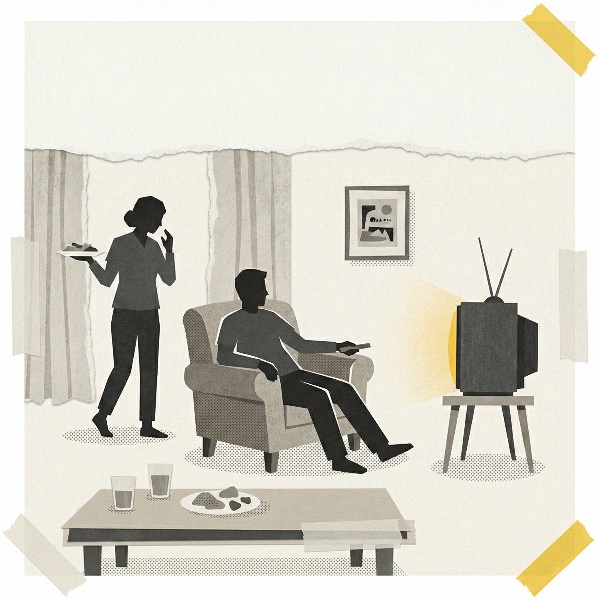
It usually starts with the sound of a chair scraping back hurriedly from the dinner table. All the while she sits, still eating, still present, still somehow responsible for what happens next. He’s already thinking about the sport highlights, the emails he needs to check, the comfortable indent his body has worked into the sofa cushions.
Of course, the plates can wait – they’ve always waited, haven’t they?
Yes, not all men.
And perhaps not all husbands.
But a large majority for it still to be a problem if we don’t speak about it.
This is how patriarchy lives in our homes. Not in the dramatic moments we see in films and tv shows, but in the ordinary Tuesday evening when the husbands unconsciously decide that their rest matters more than the continued domestic chores. It is woven so deeply into the fabric of our daily lives that questioning it feels like questioning why water flows downhill. It’s a bit like this “emotional furniture” that we’ve inherited – heavy, ornate pieces that belonged to our forefathers, taking up space in every room of our relationships. We constantly manoeuvre around them, often so naturally, that we forget they’re there. Until someone points out how difficult it is to move freely.
The trouble is that we men have spent years perfecting the art of strategic incompetence. “I don’t know where the good plates are kept,” you’ll hear us say, standing in the very kitchen we lived in for many years. “You’re so much better at talking to the children’s teachers,” we’ll insist, despite having the same degree, the same capability for conversation. It’s brilliant, really – this learned helplessness that sounds like humility but functions like entitlement.
When did we decide that our career stress trumps our partner’s? When did “I’ve had a long day” become the universal excuse whilst their long days somehow still includes planning tomorrow’s meals, remembering whose school shoes need replacing, keeping track of when the extended relative’s birthday falls – often while still navigating their own personal career plans.
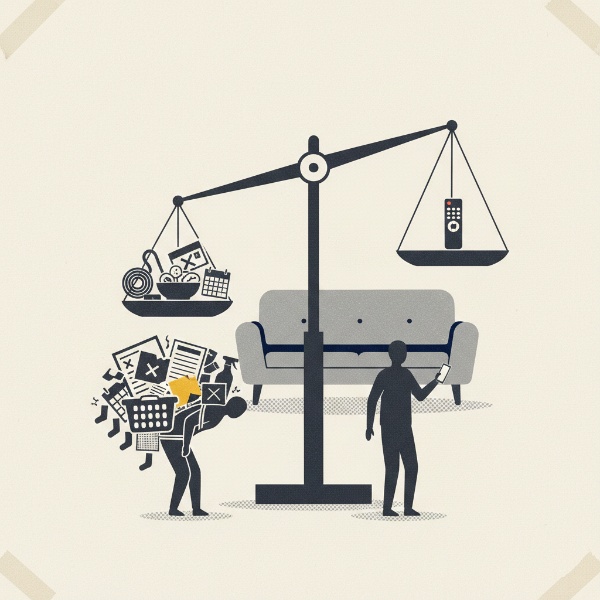
The mathematics of households is fascinating in its imbalance. Husbands credit themselves for “helping” with housework – as if we’re guests offering assistance rather than adults maintaining our own living space. We joke about “babysitting” our own children whilst our partner somehow just… parents them, as if it’s some form of inherent skillset they are born with. We take on the fun tasks, the visible ones, the ones that come with immediate gratitude, whilst they handle the invisible labour that keeps our collective lives and homes functioning.
If you’re a husband or a male partner, take a moment now. Think about the way you responded when she was last unwell. Did you step up completely, or did you treat it like covering someone’s shift – temporarily, noteworthy, deserving of recognition. “I did three loads of washing today,” we proclaim, the same way we might announce climbing Everest, whilst she’s done the same task countless times without mention. Or even acknowledgement.
Then there’s the way emotional labour gets outsourced without realisation. They remember birthdays, maintains relationships with both sets of parents, notice when you are struggling. We’ve somehow convinced ourselves that we are “not good with people” whilst simultaneously expecting to be kept informed about everyone’s lives through their careful curation. And then there are the decisions we’ve abdicated, while still maintaining ‘veto’ power. We might not plan the meals, but certainly have strong opinions about them. We rarely organise the social events, but reserve the right to be tired or busy when those events arrive.
But perhaps the cruellest part is how we have confused being a “good husband” with performing basic human decency occasionally. We expect gratitude for doing our share, recognition for our growth, and patience for our learning curve. Meanwhile, they’ve been running the household (and often career) whilst we’ve been auditing performance and grading our own participation.
Small moments of revelation appear everywhere. When restaurant bills automatically come to us. When we interrupt their stories to add our own interpretation. When we schedule work calls during family time but expect them to work around their commitments to accommodate ours. When we claims to support their dreams whilst still expecting them to be the primary keeper of our reality.
The weight of recognition can settle heavy in the chest. Not guilt, exactly, but something closer to grief – for the partners who’ve been carrying so much whilst we convinced ourselves that we were sharing the load equally. For the years of imbalance mistaken for harmony. For the comfort drawn from a system never questioned because questioning it would require changing it.
I know this will be an uncomfortable read for many. I myself have been through this in several iterations – and even when I think I’ve changed, I notice something new. So it’s a process. We just need to keep taking steps.
To every man reading this who feels that uncomfortable stirring of recognition – you might not be the villains, but, remember, we are not victims either. We are products of a system so deeply embedded that dismantling it feels impossible until you start with the first piece: the sound of your own chair, and the conscious choice to remain seated until the work is truly shared.



 I Wrote Those - by Sid Balachandran
Leave a comment